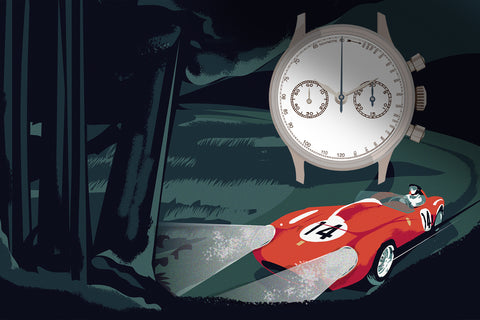
When MB&F first revealed the Legacy Machine Sequential Evo in 2022, the brand’s third major collaboration with Belfast-based watch designer Stephen McDonnell, it won the overall top prize, the Aiguille d’Or, at the year's Grand Prix d’Horlogerie de Genève (GPHG). The Sequential Evo represented an entirely different way of thinking about the chronograph, and in 2024, they expanded on this by introducing the Sequential Flyback, the instant-reset function originally used by pilots as far back as the 1930s.
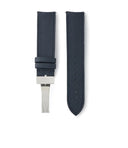
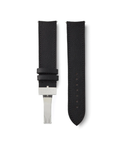
The platinum case features a polished bezel, satinated midcase and a polished display caseback secured by eight screws. In the midcase are the five polished square pushers as well as the crown. The lower pushers on either side of the watch are embossed with "Flyback". The short lugs, high-polished on the top, have brushed facets and profiles, and curve down dramatically to meet a black leather strap, each secured by three screws visible on the movement side of the case. They come together with a double-fold, spring-loaded clasp, signed with the brand mark.
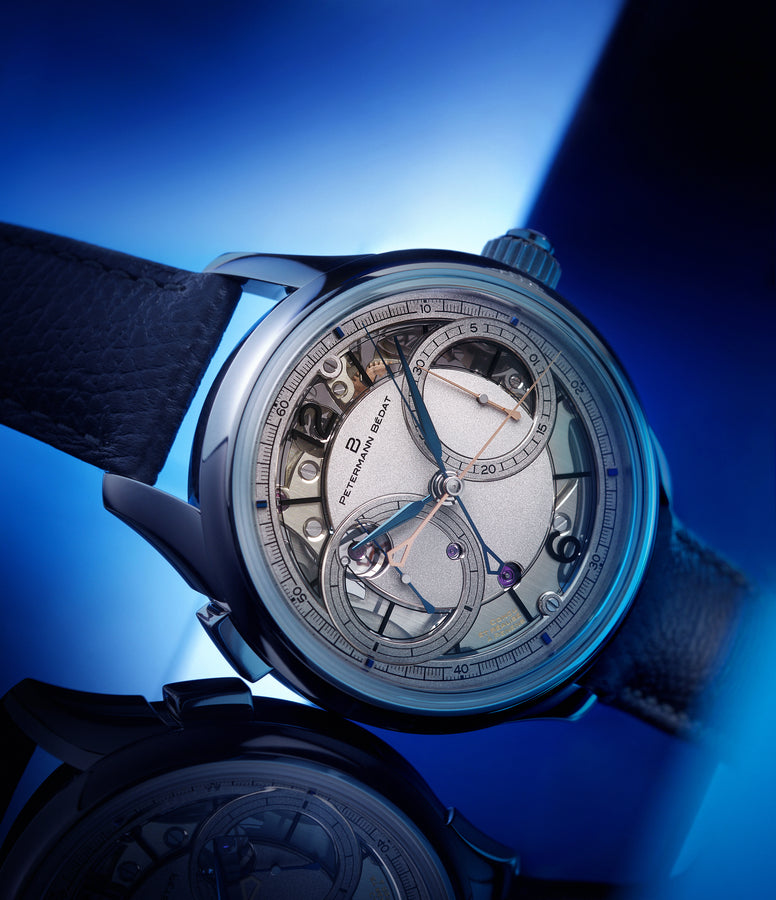
The minimal bezel affords more real estate to the dial-free aesthetic under the domed crystal. The four-armed balance wheel is secured by the familiar twin-arm bridge that towers over the rest of the dial. North of it are the twin 30-minute counters, while to the south of the balance lie the two large chronograph seconds registers. These wear a similar layout – a chapter ring with black printed serif numerals and baton markers, while the centres show off the thoughtfully crafted mechanics underneath, with bridges and components mirroring each other's form. The chronograph minutes are tracked by blued hands in a classic style, with rounded counterweights. The base of the dial is a brushed deep blue, further complementing the blue accents throughout.
Flanked by the two chronograph seconds registers, at 6 o’clock, is the time-telling display. The register is the only solid one, and opposed to previous examples of the EVO line, the Sequential Flyback's time-telling display is placed at an angle, facing the wearer and placing it slightly separate from the chronograph functions, allowing for ease of reading. The classical motif is further continued as the dial features Roman numerals and the brand mark printed in black, in addition to black, arrow-tipped hands.
McDonnell’s innovation involves two independent vertical clutch chronographs linked by a Twinverter mechanism. While the chronographs can individually be engaged by their respective pushers, the fifth pusher at 9 o’clock governs the functioning of the chronographs when they need to be run in parallel to time to simultaneous events, or in sequence to time successive laps. The elegant solution affords a level of functionality that is absent even in most rattrapante chronographs.
A significant change was made to accommodate the flyback complication, whose function essentially allows the wearer to stop, reset, and start a running chronograph via a single press, rather than having to use two pushers as on a traditional chronograph. This is particularly helpful in cases where you want to time the overall length of an event, but also need to keep track of shorter spans of time within that event.
The internal jewelling of the vertical clutches is core to this flyback chronograph, with McDonnell adding a special jewelled roller to the mechanism, and subsequently the number of jewels in the movement was increased from 59 to 63. Additionally, several of the levers and hammers have been rearranged to accommodate the new functions, while the power reserve indicator is in keeping with the more restrained, classic look of the dial, with a blued hand indicating the "E" (empty) and "F" (full).
The theme of symmetry, peaking from under the registers on the dial side, continues onto the movement side as well. The two large, thin-rimmed intermediate wheels of the chronograph sit atop the gold minute counter wheels as well as those of the twin going trains. Further down, secured by a single, irregularly shaped bridge, are the twin mainspring barrels, arranged vertically. They are slightly different in size, but this arrangement is crucial not just to providing the manual wind calibre with 72 hours of autonomy but also for accurate timekeeping even with both chronographs engaged.
The larger bridges wear rhodium plating, giving them a darker appearance. They wear Côtes de Genève while the smaller, triangular bridges are mirror polished. All bridges bear sharp anglage and many of the visible jewels, such as the ones anchoring the mainspring barrels, are ensconced in gold chatons. The watch designer’s name is etched in an elegant calligraphic font, as is the jewel count and the country of origin.
A Collected Man is a Pre-Owned Approved partner of MB&F, a relationship which stems from our shared values and the deep appreciation we have for the work of Maximillian Büsser and his friends.