The references
The Datograph Handwerkskunst was released as part of a trio of references to mark the 25th year of the hallowed original. While it was first seen alongside a special Datograph Up/Down (in white gold with a blue dial; reference 405.028) and the Datograph Perpetual Tourbillon Honeygold Lumen (reference 740.055FE), the Handwerkskunst was clearly in a league of its own in terms of specialness.
After all, the Handwerkskunst line represents the finest, most extensively hand-crafted iterations of current and historic references. Launched in 2011 to showcase the brand’s in-house handcraft ability, the Datograph Handwerkskunst is the eighth and latest offering from the line. Based on a modern interpretation of the first generation of the Datograph, the Handwerkskunst edition was the brand’s acknowledgement of that original’s popularity. It was produced in a series of 25 pieces.
The details
The case is identical to the one found on the modern Datograph Up/Down, measuring 41mm across and standing just over 13mm tall. However, it is crafted from yellow gold, making it only the second Datograph reference to be made in this metal. This too references a mythical, off-catalogue reference 403.041 from 2008, often referred to as the ‘yellow jacket’. It was often seen on the wrist of the brand’s executives at watch fairs although a few are understood to have been sold privately to valued clients.
The polished, rounded bezel meets the horizontally satinated midcase in a flat facet. On the other end, the circular brushed caseback joins the midcase in a polished double facet fashion. The midcase is home to the two chronograph pushers as well as the large, signed and knurled crown. On the other side, between 9 and 10 o’clock, lies another squared pusher to quick set the date. Seen in profile, the tops of the pusher match the grain of the midcase’s horizontal satination.
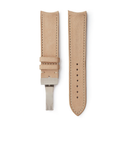
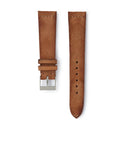
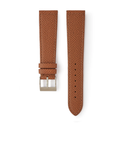
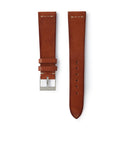
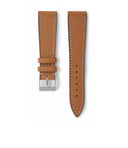
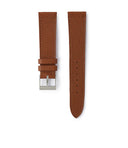
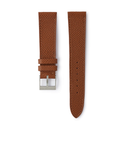
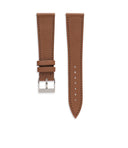
The lugs, gently stepped from the case, have a marginal facet that enhances their otherwise simple, tapering form. Their 20mm gap is furnished with a fresh, dark brown, large-grained leather strap secured by a matching, signed yellow gold deployant clasp.
The craft
The main item of course is the dial. With both applied baton and Roman hours, and the lack of the up/down power reserve, the dial here is reminiscent of the first generation Datograph. However, to accommodate the hand-hammering, or tremblage, adornment as well as the chapters and tachymeter scales, the registers and date windows have been moved fractionally south of where you would find them on the regular series watch.
The solid gold, stepped dial is entirely covered in microscopic indentations, created by a burin, hammer and a steady hand over several days. The result is so even and subtle that it appears as if naturally occurring. The dial is bathed in rhodium which blackens the colour of gold, while the subsidiary registers are silvered. This again brings to mind the black dial and white registers on the ‘yellow jacket’ Datograph.
While the registers aside from the hours chapters are printed on the standard watch, irrespective of their scale, they are all created in relief on the Handwerkskunst example. Save for the hours chapter, that is, which is still applied. The gold hours batons and all Roman and Arabic numerals are vertically satinated at the top. This finish extends to the lancet-style hands as well, in an attempt to increase contrast and legibility against the shimmering backdrop.
The caseback – adorned with laser engraved details such as the brand mark and serial number, limited number out of 25 and precious metal hallmarks – offers a panoramic view of the remarkable, manually wound calibre L951.8. The calibre is known for its highly intelligible layout, with the time display gear train and the chronographs wheels and lever segregated in the southern and northern halves respectively.
In the Handwerkskunst, this divide is celebrated by two types of finishing. The bridges in the southern half wear a frosted finish remiscent of classical pocket watches (while on the standard watch they wear Glashütte striping). The chronograph levers are extensively black polished, as are components such as the swans neck regulator and escape cock. However, it is the balance bridge that is worthy of closest inspection – its relief-style floral engraving, rounded and polished, are accentuated by a lush, hand-hammered backdrop.
As a celebration of the Datograph, the Handwerkskunst iteration stands supreme. It says something that there is more to it than the superlative hand craft. It is a rare instance of the restrained Glashütte brand reminiscing and tipping its hat to cherished details from beloved historic references.