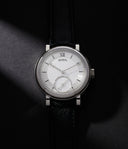
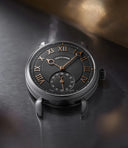
The Patek Philippe Reference 3940 is perhaps the most iconic perpetual calendar of the modern era. The design, balanced and restrained, had details specific to each of the three series it was produced in (plus the 25-piece series for Beyer and the pre-series) between 1984 and 2007. This makes it especially attractive to the detail-minded collector. Paired with the slim, micro-rotor calibre 240Q, the 3940 was always destined to be a modern classic.
The best of two worlds
This example, which retailed in 2003, still bears some evidence of the historic brand's transition to modern manufacturing processes. As such, this piece – and indeed several others we have encountered – bears a blend of attractive traits from two series of production of the 3940. The marriage of such elements makes this example all the more attractive to the detail-minded enthusiast.
The three-part yellow gold case – measuring a classical 36mm across and standing just 8mm tall – is beautifully rounded. The concave bezel gives way to the rounded midcase from which the lugs flow organically. Partially recessed in the midcase is the knurled and signed crown. In between the lugs lie three of the four correctors for the perpetual calendar complication. The fourth corrector lies at 9 o’clock.
The lugs, 18 mm apart, all feature precious metal and makers' hallmarks on their undersides. This is where the hallmarks are typically found from later series of production. This watch comes with a display caseback as well as an additional closed caseback – a detail also typical of later series of the 3940.
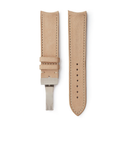
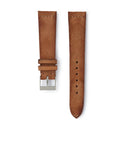
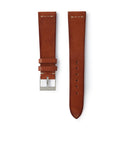
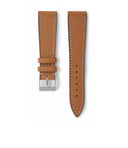
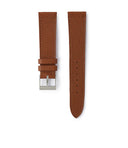
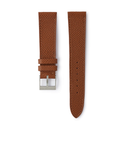
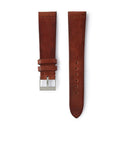
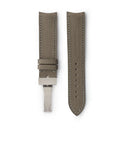
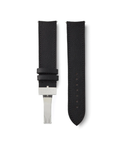
The lugs are furnished with a large-grained leather strap in a rich burgundy, secured by a matching yellow gold deployant clasp with the Calatrava motif, as most examples of the reference after 1997 feature.
The dial details
The dials produced by Stern Frères also has several traits that mark it as typical as one from the tail end of the second series. It still features the serif-style fonts typical of second series examples – those found on the third and fourth series examples moved to a more modern, sans-serif variety.
Another detail of the second series of watches is the placement of the "σ SWISS σ" mark at 6 o’clock. In the second series, typically this lies just below the arc of the minutes chapter, as seen in this example. In the third and fourth series, the arc of this printing matches the trajectory of the minutes chapter. While possessing these two details, the fact that the dial has a sectored leap year indicator points to this being produced in the late stages of the second series of the 3940.
This example features what the brand refers to as an opaline dial. It has a subtle, vertical brushed texture to it. It is punctuated with faceted gold hour markers, with twin markers at 12 and pyramid-style markers at 3 and 9 o’clock. In between these, the minutes are denoted by gold plots. Each register expresses two units of time. The one at 3 has an outer chapter of the 12 months of the year, while within lies the leap year indication. Similarly, the register at 9 has an outer chapter of 12 months in French, while inside lies the two-tone, day/night indication. The sector at 6, proportionally larger, incorporates an outer chapter of the 31 days of the month (also in French), while within lies the moon phase display. The latter is built on sapphire glass, giving a lustrous quality.
The registers at 3 and 9 o’clock have a frosted quality which visually distinguishes them. The numerals, as noted previously, still have a delicate serif quality to them. Particularly noteworthy is the date register, where the numerals are elongated, in a similar fashion to the Reference 3448. The date indicator is large and feuille-shaped and crafted from gold. The other two registers also feature smaller gold feuille hands for the day/night and leap year indication. Larger, blued stainless-steel feuille hands indicate the months and days. The hours and minutes indicators are dauphine-style and crafted from gold.
The calibre
Visible through the display caseback is the technical and aesthetically impressive self-winding 240Q. It measures under 28mm across and stands just 3.8mm tall, wound by a 22k gold micro-rotor. It beats at 21,600 vibrations per hour and when fully wound, the mainspring offers 45 hours of autonomy.
It is finely adorned, with perlage on the baseplate and the bridges finished with Geneva striping and their bevelled edges hand-finished to a mirror effect. The brand mark, jewel count (27) and the movement’s adjustment to five positions is detailed in gold engraving on the bridges. The Geneva seal, a constant feature of Patek Philippe in this era, is also similarly engraved on the bridge.
This Reference 3940 comes with its full set of original paperwork and box (complete with a watch winder), makes this package all the more compelling.